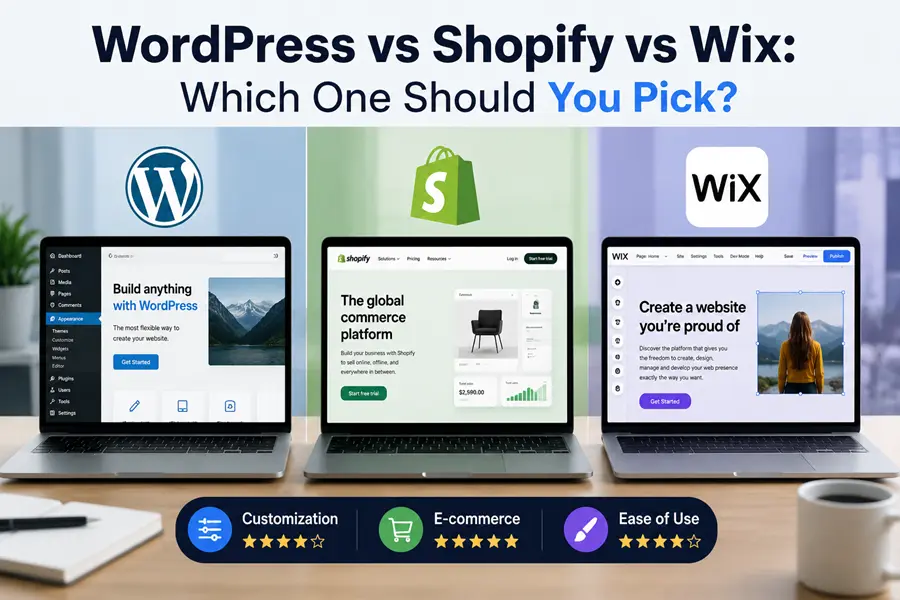
WordPress vs Shopify vs Wix is one of the first decisions you’ll make as a small business owner building a website, and it’s easy to get stuck comparing feature lists that all start to sound the same. The honest answer isn’t which platform is “best” overall. It’s which one matches what your website actually needs to do.
Quick Answer
- Choose WordPress if you need full customization, heavy content, or long-term SEO growth
- Choose Shopify if your main goal is selling products online
- Choose Wix if you run a service business and want something simple to manage yourself
If none of those feels like a clean fit, keep reading most small businesses land in a gray area, and that’s normal.
WordPress: Built for Control and Growth
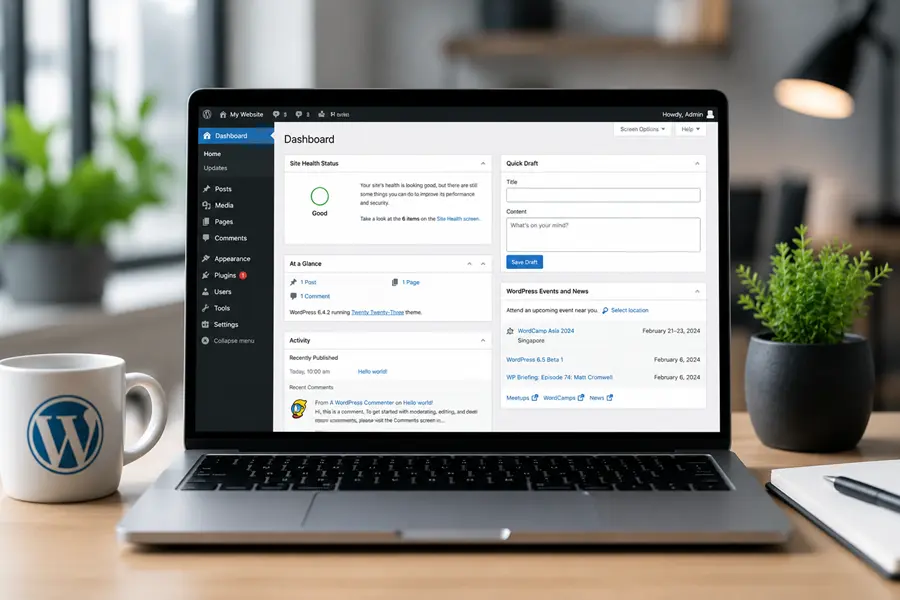
WordPress powers a huge share of websites worldwide, and the reason is control. There’s no forced hosting provider, no ceiling on customization, and a plugin ecosystem that can make the platform do almost anything you need.
The trade-off is a slightly steeper learning curve and more hands-on management updates, backups, and security aren’t handled for you automatically the way they are on Shopify or Wix.
This is exactly the gap WordPress development services and ongoing maintenance plans are built to close, so you get WordPress’s flexibility without having to manage the technical side yourself.
Shopify: Built for Selling Products
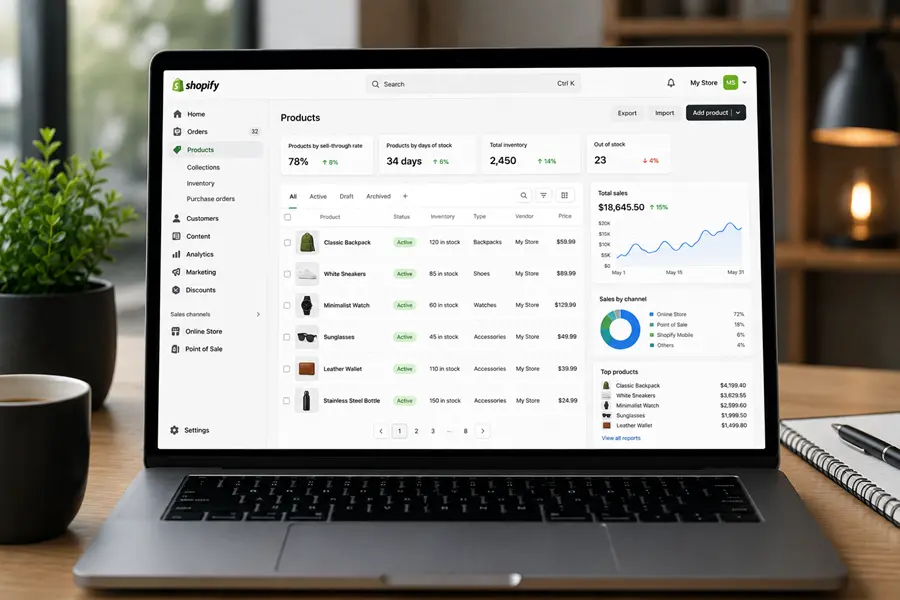
If your website’s main job is selling physical or digital products, Shopify is the clear specialist. Cart, checkout, payment processing, inventory, and shipping are all built in and polished from day one.
The catch is cost. Shopify’s monthly fee looks affordable until app fees start stacking up many stores end up paying an extra $50 to $150 a month once they add the apps they actually need to run smoothly.
Wix: Built for Simple and Fast

Wix is the easiest of the three to get running without any technical help. Drag-and-drop editing, a large template library, and built-in tools make it a solid pick for service businesses, consultants, or anyone who wants a clean site they can update themselves.
Where it falls short is scale. As content or functionality needs grow, Wix has less room to expand than WordPress, and migrating off it later means starting the design and SEO work over.
WordPress vs Shopify vs Wix: Side-by-Side
WordPress | Shopify | Wix | |
Best for | Content-heavy sites, blogs, full customization | Selling physical or digital products | Service businesses, portfolios, simple sites |
Ease of use | Moderate some learning curve | Easy, built for non-technical store owners | Easiest drag-and-drop, no code |
SEO potential | Strongest long-term, most flexible | Good, improved a lot in recent years | Good for small sites, less flexible at scale |
Ecommerce | Needs WooCommerce add-on | Best-in-class, built for it | Decent for small stores |
Ongoing cost | Hosting + maintenance, variable | Monthly fee + app costs add up fast | Monthly plan, fairly predictable |
You own it | Yes full control, your hosting | No you’re renting the platform | No you’re renting the platform |
What About Cost?
Wix and Shopify both advertise low starting prices, and for a very simple site, that number can hold up. Where costs climb is scale: Shopify’s app fees and Wix’s plan upgrades both add up faster than most people expect once a business grows past the basics.
WordPress’s cost structure works differently no monthly platform fee, but hosting and maintenance instead. We broke down real 2026 numbers in our WordPress website cost guide if you want the full picture before deciding.
A Quick Note on SEO and AI Search
All three platforms handle basic SEO reasonably well now, so this isn’t the deciding factor it used to be. Where WordPress still pulls ahead is advanced technical SEO, for businesses competing on genuinely difficult keywords. It’s also worth noting that AI tools like ChatGPT and Perplexity are increasingly pulling answers directly from well-structured web content, which makes clean site structure matter for more than just Google rankings going forward.
So, Which Should You Actually Pick?
Think about where your business will be in 12 to 24 months, not just this week. Switching platforms later usually means rebuilding your design and starting your SEO progress over, so it’s worth getting this right the first time rather than picking whatever’s fastest to launch.
If you’re leaning toward WordPress but not sure it’s the right call for your specific business, get in touch and we’ll walk through it with you honestly, including if WordPress isn’t the best fit.
Frequently Asked Questions
Is WordPress better than Shopify?
It depends on what you’re building. WordPress is better for content-heavy sites and long-term SEO flexibility. Shopify is better if selling products online is your main goal, since its checkout and inventory tools are more polished out of the box.
Is Wix good enough for a small business?
Yes, for straightforward service-based websites that don’t need heavy content or complex functionality. It becomes limiting as a business grows or needs more customization than Wix’s templates allow.
Can I switch platforms later if I start with the wrong one?
Yes, but it’s more work than getting it right upfront migrating usually means rebuilding your design and re-establishing your SEO rankings, which takes time you could avoid.
Do I need WooCommerce if I choose WordPress for a store?
Yes, WordPress doesn’t include ecommerce functionality natively. WooCommerce adds it as a plugin, giving you Shopify-level selling tools while keeping WordPress’s flexibility and content control.