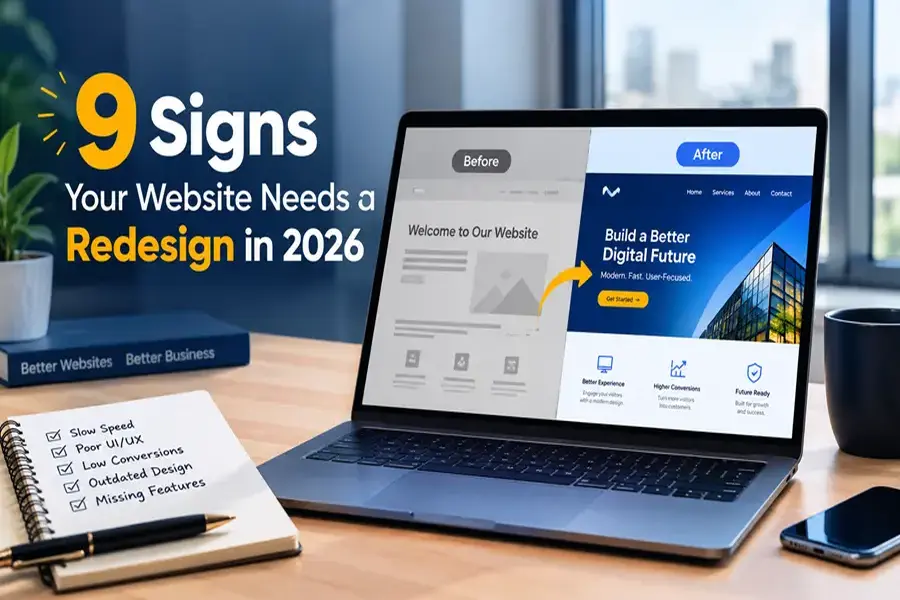
If your site loads slowly, looks broken on a phone, or hasn’t brought in a lead in months, it’s telling you something. Most business owners don’t notice the decline because it happens gradually one missed inquiry at a time, not all at once. Here are the 9 clearest signs it’s time for a redesign, what each one is actually costing you, and how to evaluate your total WordPress website redesign cost.
1. Your Site Takes More Than a Few Seconds to Load
If your homepage takes longer than 2 to 3 seconds to load, visitors are already leaving before they see your offer. Google uses Core Web Vitals to judge page health too, so a slow site hurts you twice — once with the visitor, and once with your rankings.
2. It Doesn’t Work Well on Mobile

More than half of all web traffic in the US now comes from phones. If your buttons are too small to tap, your text is squished, or your layout breaks on a smaller screen, you’re losing a majority of your visitors before they even engage. Google also ranks mobile experience first, so a clunky mobile site is a direct SEO disadvantage.
3. Your Traffic Is Flat or Falling, and You Don’t Know Why
A steady decline in organic traffic often traces back to outdated site architecture, not your content. Between older SEO practices and current standards, a lot changes in a couple of years — clean URL structure, proper heading hierarchy, and page speed all factor into rankings today in ways they didn’t before. If you haven’t touched your site’s structure in a while, that gap is probably showing up in Google Search Console.
4. People Visit but Don’t Contact You
Traffic without leads is usually a design and structure problem, not a marketing problem. If visitors land on your pages and leave without calling, filling out a form, or reaching out, look at your calls to action. Older sites were often built to look good, not to guide someone toward taking the next step.
5. Your Competitors’ Sites Look More Modern Than Yours
Pull up your top three competitors next to your own site. If theirs feels more current and more trustworthy, your customers are noticing the same thing you just did. First impressions of a website are almost entirely design-driven, and that judgment happens in seconds — long before anyone reads a word of your content.
6. Updating Anything Requires Calling a Developer
If changing a price, swapping a photo, or adding a page means waiting on someone else, your website is working against you instead of for you. A modern site should let you make basic updates yourself without touching code.
7. The Design Still Reflects an Old Version of Your Business
If you’ve rebranded, added services, or simply grown since your site was built, an outdated design is quietly telling visitors an outdated story. Your site should reflect the business you run now, not the one you ran a few years ago.
8. Your Site Runs on an Old, Heavy Theme
Older WordPress themes often carry bloated code, stacked plugins, and images that were never compressed. Patching a site like this only goes so far — at a certain point, rebuilding on a clean, modern foundation outperforms any amount of ongoing fixes. This is also why routine WordPress maintenance matters even after a redesign — it’s what keeps a new site from ending up back in this same spot a few years from now.
9. You Hesitate Before Sharing Your Own URL
This one is less technical, but just as telling. If you catch yourself saying “don’t look too closely, it’s a bit outdated” when handing someone your website, you already know the answer. That hesitation is worth listening to.
What to Do If You Recognize These Signs
Not every sign on this list means you need a full rebuild. If your site’s structure and rankings are still healthy but the design feels dated, a focused redesign is usually enough. If the underlying theme is old, the plugins are stacked deep, and nothing about the site has been touched in years, a full WordPress website redesign on a clean foundation is typically faster and less expensive than trying to patch what’s already there. Either way, the goal is the same: fix it before the slow decline turns into a steep one.
Signs Your Website Needs a Redesign: Questions, Answered
How do I know if my website needs a redesign or just an update?
If your site’s core structure and search rankings are still solid but the design feels outdated, a lighter refresh may be enough. If load times, mobile experience, and lead generation are all struggling at once, that combination usually points to a full redesign instead.
How often should a business website be redesigned?
Every 2 to 3 years is a reasonable cycle for most business websites, since design standards, SEO requirements, and user expectations all shift meaningfully over that time. Sites that are actively maintained can sometimes stretch longer before needing a full rebuild.
Can I fix these issues without a full redesign?
Some issues, like a few slow-loading images or a missing call to action, can be patched without starting over. But if several signs from this list apply at once, patching usually costs more in the long run than rebuilding on a clean foundation.
What’s the first thing I should check if I suspect my site is outdated?
Run your homepage through a free page speed test and check how it looks on your own phone. Those two checks alone will tell you more in five minutes than guessing ever will.
Ready for a Site That Works as Hard as You Do?
If two or more of these signs sound familiar, your site is likely costing you leads right now. Contact WebCore Technologies for a free audit — we’ll tell you honestly whether you need a full redesign or just a few targeted fixes.